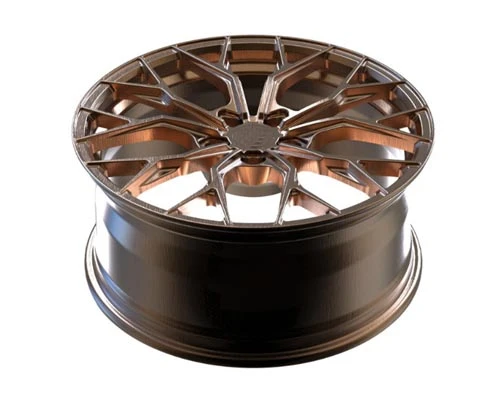
The car wheel (or rim) is a core metal component that supports the tire and connects the vehicle body to the road, playing a pivotal role in ensuring driving performance. Serving as the internal structural support for the tire, it must bear the vehicle's weight and absorb road impacts while precisely transferring driving torque to the road surface via wheel bearings. Additionally, its alloy composition allows for efficient heat dissipation, enhances straight-line stability, and optimizes fuel efficiency. Structurally, the wheel connects tightly to the axle via spokes and secures the tire with its rim; parameters such as size, offset, and PCD (bolt pattern) are engineered to match specific vehicle requirements, ensuring efficient brake cooling while maintaining handling precision and driving safety.
Manufacturing processes directly determine a wheel's performance and suitability for specific applications. Currently, mainstream aluminum alloy wheels are produced using three methods: gravity casting, forging, and low-pressure precision casting. Gravity casting is simple and cost-effective but offers only moderate material density uniformity. Forging utilizes high-pressure compression to achieve maximum density, minimum weight, and superior strength, making it the preferred choice for high-performance vehicles. Low-pressure precision casting involves forming the wheel under 0.1 MPa of pressure, striking a balance between high strength, lightweight design, and cost control; with a yield rate exceeding 90%, it has become the dominant manufacturing method for high-quality aluminum alloy wheels.
Regarding surface finishing, wheels are primarily categorized into painted and plated types. Standard passenger vehicles often feature painted finishes-applied via spraying followed by heat curing-which are cost-effective and durable, retaining their color stability even after years of use. Plating processes include silver plating, water plating, and pure electroplating. Pure electroplated wheels offer exceptional durability and a premium finish, making them popular for mid-to-high-end sedans, whereas silver-plated and water-plated wheels-known for their brilliant luster but shorter finish longevity-are favored by younger consumers seeking a personalized look.
A wheel's specifications significantly impact vehicle performance and usage. Wheel size refers to the diameter; larger wheels paired with low-profile tires enhance visual impact and handling stability but increase fuel consumption. Wheel width-commonly known as the "J-value"-directly determines the range of compatible tires. PCD (Pitch Circle Diameter) refers to the diameter of the circle formed by the mounting bolt holes; this is the most critical parameter to match when upgrading wheels, as selecting a PCD identical to the original specifications is essential for driving safety. Parameters such as offset and center bore must also strictly adhere to the vehicle's design standards to avoid compromising the suspension system or braking performance.
Proper maintenance and inspection of wheels are important for daily use. If the wheels are hot, allow them to cool naturally before cleaning; never rinse them with cold water, as this can damage the aluminum alloy material or warp the brake discs. Avoid using stiff brushes during cleaning to prevent scratching the surface coating. If unusual noises are heard from the wheel bearing area while driving, prompt inspection is required; it is recommended to replace front wheel bearings in pairs. Regularly check for wheel deformation to prevent issues such as uneven tire wear and increased rolling resistance-which reduce fuel economy-and to ensure the vehicle remains safe and stable on the road.