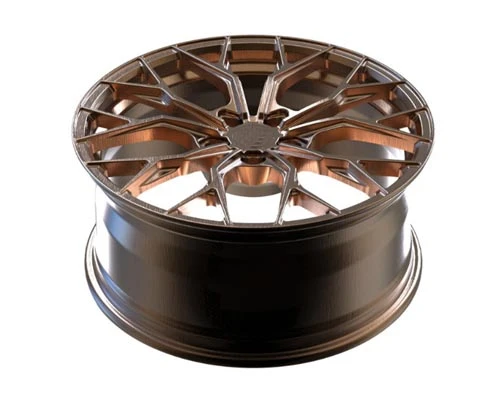
In the 1930s, the combination of steel spokes and rolled aluminum rims by German engineers laid the foundation for the development of aluminum alloy wheels. Following World War II, aluminum alloy wheels began to be used on standard passenger vehicles.
One-piece cast aluminum alloy wheels emerged in 1958, followed shortly thereafter by forged aluminum alloy wheels. Wheels featuring intricate, fine-mesh designs became popular in the 1980s, while wheels emphasizing three-dimensional styling began to appear in the 1990s.
China's aluminum wheel industry has a history spanning just over thirty years. Qinhuangdao Dicastal Wheel Manufacturing Co., Ltd. was established in 1988, and preparations for the Guangdong Nanhai Zhongnan Aluminum Alloy Wheel Factory began in 1989. Foshan Nanhai Anchi Aluminum Alloy Wheel Co., Ltd. was founded in May 1999. By 2006, China had become a major global producer of aluminum wheels, with an annual output exceeding 62 million units.
Energy, the environment, and safety are three critical issues of global concern today, and the development of the automotive industry and the widespread adoption of automobiles are closely linked to them. Aluminum alloy-characterized by its light weight, high strength, excellent formability, moderate cost, and high recyclability-plays a vital role in reducing vehicle curb weight, lowering fuel consumption, mitigating environmental pollution, and improving handling performance; it has thus become a key material in the automotive industry.