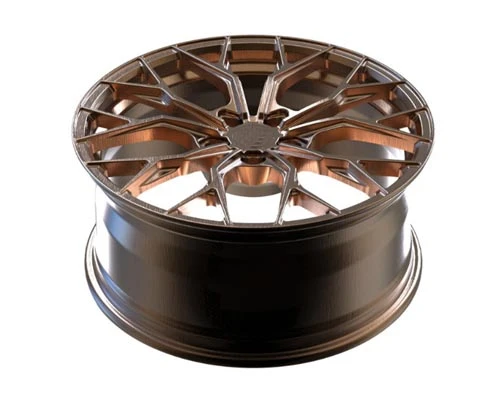
Selecting car wheels requires a comprehensive evaluation of material, size, technical specifications, and manufacturing quality to balance safety, performance, and aesthetics. Regarding materials, steel wheels offer high strength and low cost-making them suitable for demanding road conditions-but they are heavy. Aluminum alloy wheels offer significant weight advantages, optimizing handling and heat dissipation while providing a wider range of designs. Size selection must strictly adhere to OEM specifications; wheels that are too large can compromise ride comfort and fuel efficiency, while those that are too small negatively impact handling and visual appeal. Furthermore, specifications such as bolt pattern (PCD), offset, and center bore must precisely match the vehicle's data to prevent interference issues. Wheels from reputable brands undergo rigorous testing, ensuring superior craftsmanship and reliability; making a rational choice based on your budget ensures you find the perfect "footwear" for your vehicle.
When verifying specific specifications, matching the bolt pattern is the fundamental prerequisite for installation. Since the bolt circle diameter varies across vehicle models, the wheel's bolt pattern must align exactly with the vehicle's factory specifications; otherwise, proper installation is impossible. The offset value is equally critical, as it determines the wheel's position relative to the suspension and braking systems; the correct offset prevents the tire from rubbing against vehicle components during turns or when driving over bumps. The center bore diameter must precisely match the vehicle's hub size to ensure concentric stability during rotation; a mismatch here can lead to vibrations at high speeds, even if the wheel is securely bolted in place.
Purchasing channels and manufacturing details should not be overlooked either. If buying online, verify that the seller's package contents are complete-ensuring the wheel itself, along with necessary bolts and washers, are all included-and familiarize yourself with the return and exchange policies to handle any potential issues. Upon receipt, inspect the wheel's surface finish; high-quality products feature a uniform, flawless paint job, smooth edges, and a weight consistent with standard aluminum alloy wheels of that size. If you have doubts about compatibility, consult a professional mechanic; leveraging their expertise to assess the fitment between the wheel and the vehicle helps avoid making a purchase based solely on visual preference. Compatibility between the wheel and the tire must also be carefully considered. Wheel width dictates the range of suitable tire sizes; pairing an overly wide wheel with a narrow tire results in insufficient tread support, while mounting a wide tire on an overly narrow wheel can compromise sidewall stability-both scenarios negatively affect handling feedback. After replacing wheels, it is also essential to verify that the tire's outer diameter remains close to the original factory specifications; this prevents discrepancies between the speedometer reading and actual driving speed, ensuring accurate information while driving.
In summary, selecting wheels is a comprehensive process involving multiple factors-ranging from material properties and dimensional precision to manufacturing quality and compatibility verification-with every aspect influencing the vehicle's driving dynamics. Only by looking beyond mere aesthetics and basing the choice on factory specifications, while also considering individual usage scenarios and budget, can one select a product that is truly compatible with the vehicle. This ensures that the new wheels not only enhance visual appeal but also provide reliable support for driving safety and performance.