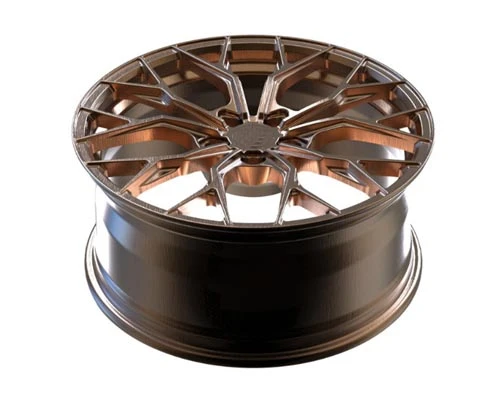
Modifying car wheels involves more than just aesthetic upgrades; it requires the precise matching of driving performance and safety parameters. Many car owners encounter issues-such as speedometer inaccuracies, reduced ride comfort, or even tire rubbing-after upgrading their wheels, often due to the improper selection of tire specifications. The key to successful modification lies in maintaining a consistent overall tire diameter and ensuring the load index meets the vehicle's requirements.
Understanding Specifications
In a tire specification like "225/45 R18," 225 represents the tread width (mm), 45 represents the aspect ratio (%), and 18 represents the wheel diameter (inches).
The Principle of Constant Overall Diameter
The core principle of modification is to keep the overall tire diameter as close as possible to the factory specification. For example, if the original setup is 225/45 R18 and the wheel size is upgraded to 19 inches while the tread width remains the same, the aspect ratio should be reduced to 40-meaning a 225/40 R19 tire should be selected.
Strategy for Increasing Tire Width
If the wheel size remains unchanged but the tire width is increased (e.g., switching from 225mm to 245mm), the aspect ratio must be lowered accordingly to control changes in the overall outer diameter.
Strict control of the overall tire outer diameter aims to keep the margin of error within 3%. Doing so ensures speedometer accuracy and maintains chassis stability. Wheels, tires, brakes, and suspension function as an integrated system; modifying only the wheels while neglecting proper tire matching can easily lead to subsequent malfunctions.