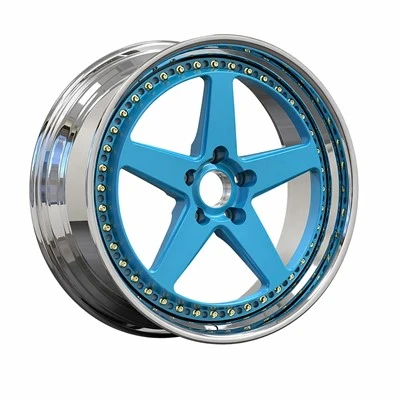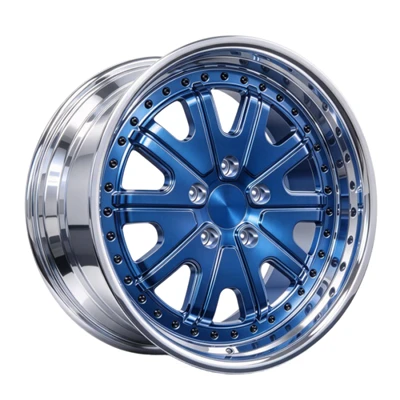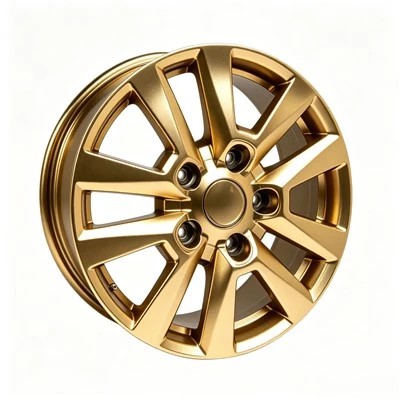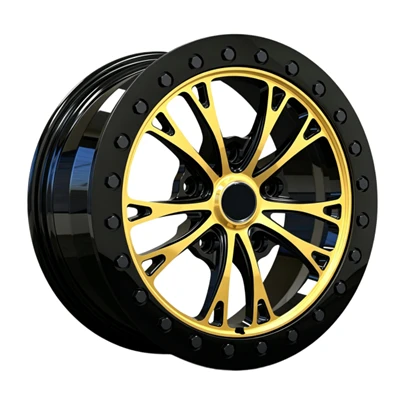

As a three-piece forged wheels supplier, I get this question all the time from customers, both new and seasoned: “Do three-piece forged wheels have a specific installation torque?” The short answer is yes—way more specific than your average mass-produced one-piece wheels. But let’s break this down, because it’s not just about slapping on a torque wrench and calling it good. Three-piece wheels are built differently than most, and that uniqueness dictates every step, especially when tightening bolts.
First, a quick refresh on what makes three-piece forged wheels stand out. Unlike one-piece wheels (forged or cast) that are a single unit, three-piece wheels are split into three parts: the front face, the barrel, and the center hub. These parts are bolted together with hidden fasteners, and that design means two separate torque jobs you have to nail—one for the wheel’s internal assembly and another for mounting it to your car. I’ve seen too many guys skip the internal torque, leading to face-barrel separation, or botch the mounting torque, warping the hub or even breaking bolts. It’s not something to wing.
Let’s start with the internal assembly torque, which is where most people mess up. The three pieces of a forged wheel aren’t just glued together—they’re held tight by anywhere from 10 to 20 bolts, depending on the wheel’s size. For our 6061 Aluminum 3 Piece Bronze Wheels, for example, we spec those internal bolts to be torqued to 80–90 ft-lbs. But that’s not a one-size-fits-all number. Why? Because 6061 aluminum, the material we use for most of our forged faces and barrels, has a specific tensile strength. If you over-tighten the internal bolts, you’ll stretch the aluminum barrel or face, which warps the wheel’s roundness—bad news for balance and durability. Under-tighten, and when you hit a pothole or speed bump, the face can shift, leading to vibration or even wheel failure mid-drive.
We also sell 3 Pieces forged Wheel Blank for custom builders, and we make sure to include a torque sheet with every blank. Builders often ask why we don’t just set a standard, but it’s because the barrel width and face design change the pressure points. A 18-inch wheel will have a different internal torque than a 22-inch one, since the larger barrel needs more tension to stay sealed against air pressure. That’s why we give a range, not a hard number, so builders can adjust based on their specific setup.
Now, the second, more critical torque: mounting the three-piece forged wheel to the car’s hub. This is where I see even professional installers slip up. For one-piece wheels, most cars call for 80–100 ft-lbs, but three-piece wheels are different. The center hub of our 3 Piece Forged Wheels Rims is a separate component that bolts to the car’s studs, and because three-piece wheels are lighter (forged aluminum is thinner but stronger than cast), the load on those mounting bolts is higher. For our custom muscle and luxury car wheels, like the 3 Piece Forged Alloy Aluminum Automobile Auto Vehicle Wheels For Custom Muscle Luxury Cars, we recommend a mounting torque of 90–105 ft-lbs. For performance cars like the Toyota Supra or GR86, in the 3Piece Style Copper Brush Face Chrome Barrel Forged Performance Car Wheel Rims For Toyota Supra GT86 GR Supra, we bump that up slightly to 95–105 ft-lbs because performance builds often have stiffer suspension and higher torque loads.
Wait, why the range? Cars have different stud types, too. Most modern cars use steel studs, but some custom builds use titanium, which has a different friction coefficient. If your studs are titanium, you’ll need to reduce torque by 10–15 ft-lbs, because titanium is more prone to galling (seizing) if over-tightened. Also, if you’re using lug nuts with a nylon insert, that adds friction, so you have to account for that in your torque wrench setting. A lot of installers skip that step—they just use the factory setting from a one-piece wheel, and end up stripping a stud or damaging the wheel’s hub mounting surface.
I learned this the hard way early in my wheel supply career. A customer brought in a set of our three-piece wheels for his Ferrari, and his installer used 85 ft-lbs, the factory one-piece spec. A week later, he called saying the face had shifted, and one of the internal bolts was loose. We checked his installation notes and saw he hadn’t followed our internal torque spec of 85 ft-lbs for that specific wheel. Turns out, he thought all wheels were the same. We ended up re-torquing the internal bolts, and now we include a free printable torque guide with every order to make sure that doesn’t happen again.
Another key point: torque sequence. It’s not just about how many ft-lbs you use—it’s the order you tighten the bolts. For three-piece internal assembly, you always tighten in a star pattern, going from the center out, just like mounting bolts. If you tighten bolts in a circle, you’ll put uneven pressure on the face and barrel, causing warping. For mounting, same rule: star pattern, and don’t tighten any bolt all the way first. Go around twice—first to 50% torque, then to full torque—to make sure the pressure is even. I’ve seen wheels go out of balance and vibrate at 70 mph because someone tightened one bolt all the way before the others. That’s a avoidable mistake if you pay attention to the sequence.
What about over-torque vs under-torque damage? Let’s talk numbers. If you go over 100 ft-lbs on internal bolts for our 6061 wheels, you can expect to see micro-cracks in the aluminum within a few thousand miles. We’ve tested this in our facility—we torqued a sample wheel to 110 ft-lbs, drove it 500 miles on a test track, and found small cracks in the barrel that would have led to a blowout. Under-torque, say below 70 ft-lbs, and the bolts will vibrate loose over time. After 10,000 miles, that loose bolt will cause the face to shift, leading to air leaks or wheel wobble. Both are dangerous, and both are preventable with the right torque.
Now, how do you get the exact torque for your wheel? Every reputable three-piece forged wheels supplier should provide a torque sheet with your order. When you’re browsing, make sure to check the product details—we list the torque specs for both internal and mounting on every three-piece wheel page. If a supplier doesn’t give you specific torque numbers, that’s a red flag. It means they’re cutting corners, and their wheels aren’t precision-engineered like ours. We design our wheels in-house, test every batch for torque and strength, so we can give you accurate numbers you can trust.
For DIY installers, I can’t stress enough: don’t use a basic torque wrench you picked up at a gas station. Get a calibrated wrench, and double-check it before every use. A $20 wrench can be off by 10 ft-lbs, which is enough to ruin your three-piece wheel. If you’re not comfortable installing wheels yourself, hire a professional who has experience with three-piece wheels. Most general mechanics don’t deal with them often, so ask if they’ve worked with forged three-piece wheels before—if not, show them our torque guide and make sure they follow it.
As someone who’s been in the three-piece wheel business for 12 years, I’ve seen a lot of horror stories from bad installations. But I’ve also seen the good ones: customers who follow torque specs, end up with wheels that last 10+ years, hold their value, and look better than any one-piece wheel. The specific installation torque isn’t just a recommendation—it’s part of what makes three-piece forged wheels reliable. It’s not a random number; it’s calculated based on the material, design, and load of each wheel.
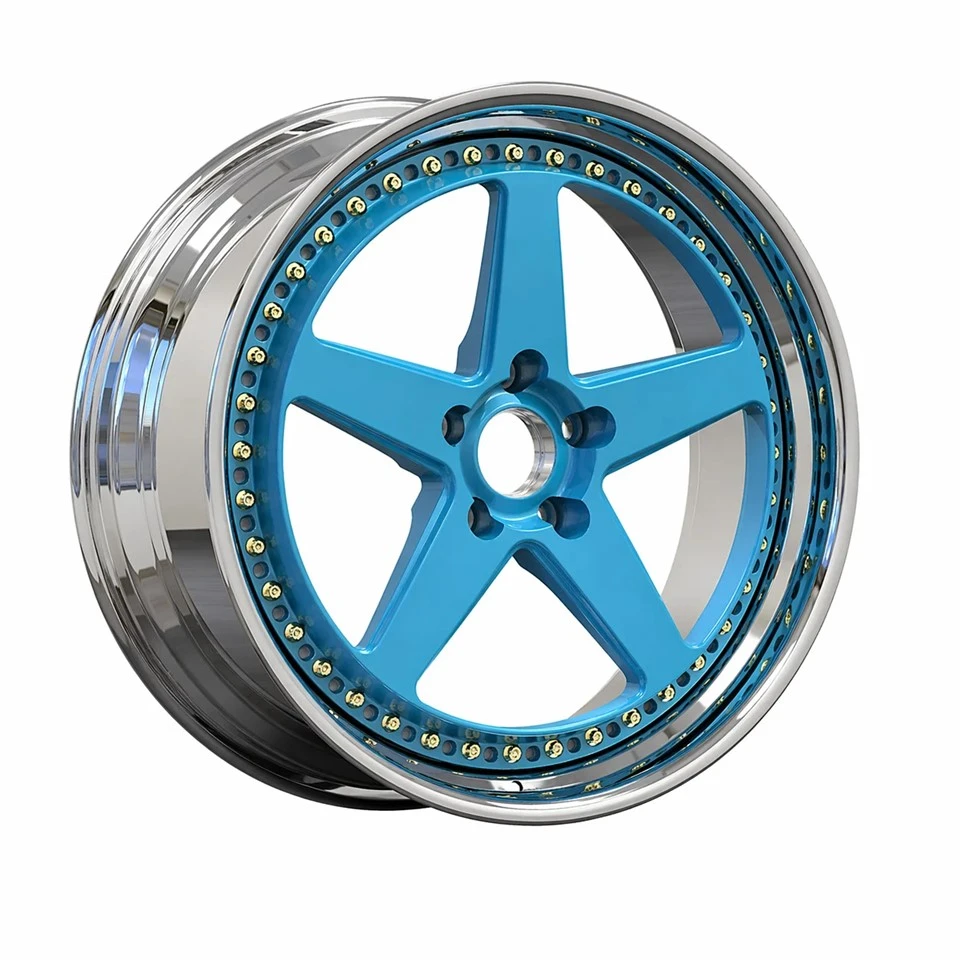

If you’re looking for three-piece forged wheels, whether for a custom build, a luxury car, or a performance vehicle, we’ve got you covered. We stock 6061 aluminum wheels in multiple finishes, wheel blanks for custom projects, and performance rims for everything from muscle cars to sports cars. Our team can send you a detailed torque spec sheet for any wheel, and we’re here to answer any questions about installation, maintenance, or care. Reach out to our team today to discuss your wheel needs and get a quote.
References
- Aluminum Association. (2022). Mechanical Properties of 6061-T6 Aluminum Alloys. Retrieved from aluminum.org
- SAE International. (2021). Torque Specifications for Forged Wheel Assemblies. SAE Standard J2533
- Forged Wheel Industry Association. (2020). Best Practices for Three-Piece Wheel Installation. FWIA Technical Bulletin
- Toyota Motor Corporation. (2021). GR Supra Wheel Installation Guidelines. Toyota Service Manual